


Picture a world where software testing is seamless, efficient, and doesn’t require the complex labyrinth of traditional coding. Enter codeless testing, a revolution in software testing.
Codeless testing is not new; test tool suppliers have released several codeless tools over the last 20 years, with varying degrees of effectiveness. They were all stifled by the lack of two key ingredients: Artificial Intelligence and Machine Learning (ML).
The advent and inclusion of AI and ML have propelled codeless testing to the enterprise level and made those previous tools redundant.
Today we look at how you can transform software quality with ValueEdge Functional Test, a new tool from the leading test tool providers – OpenText (previously Micro Focus).
ValueEdge Functional Test allows you to easily create, edit and execute automated browser & mobile tests in the cloud without writing a single line of code. And don’t worry if you haven’t heard of it yet; ValueEdge Functional Test is so new that it’s yet to appear on lists of codeless tools.
Why Do You Need Codeless Testing?
In today’s fast-paced digital world, software quality is paramount. Yet manual testing throttles your project velocity, defect fixes often come late (if at all), and projects almost always squeeze testing cycles. In this environment, keeping on top of quality is a real problem.
Test automation is a potential solution, but traditional code-based testing methods can be time-consuming and complex, especially if you don’t have skilled test automation resources. Even when you do have the right people, it’s often challenging to carve out sufficient time for your dedicated experts to create and maintain your automated test packs. This is where codeless testing is a game changer.
Codeless testing makes automation easier, quicker, and less reliant on experts.
The beauty of Codeless Testing lies in its simplicity. It enables you to create and execute robust test cases without requiring a deep understanding of programming languages or coding expertise. This levels the playing field, allowing business users, BAs, PMs, DBAs and others to contribute to the test automation process.
The Main Benefits of Codeless Test Tools
In a nutshell, codeless testing allows you to easily and quickly create high-quality automation tests without technical resources. This efficiency saves time, money, and hassle while increasing quality and user experience.
To break it down further, here are 6 top benefits of codeless tools:
- Fast test creation – Deliver automation sooner
- Low test maintenance – Reduce time, cost and headaches
- Easy to learn – Little training needed
- No coding – More people involved in test creation
- Removes tedious work – People can focus on essential tasks
- Saves Money – Easy to justify getting the tool
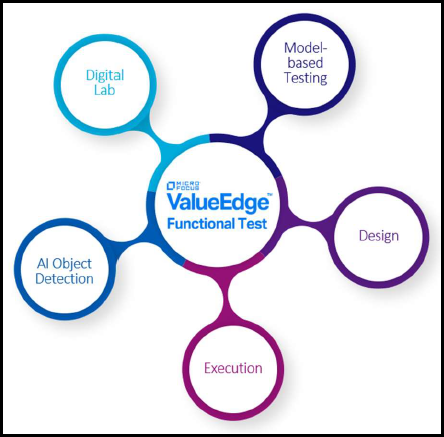
How Does ValueEdge Functional Test Codeless Work?
Not all codeless test automation tools are built equally; you should always scratch beneath the glossy presentation to understand why and how the tool works.
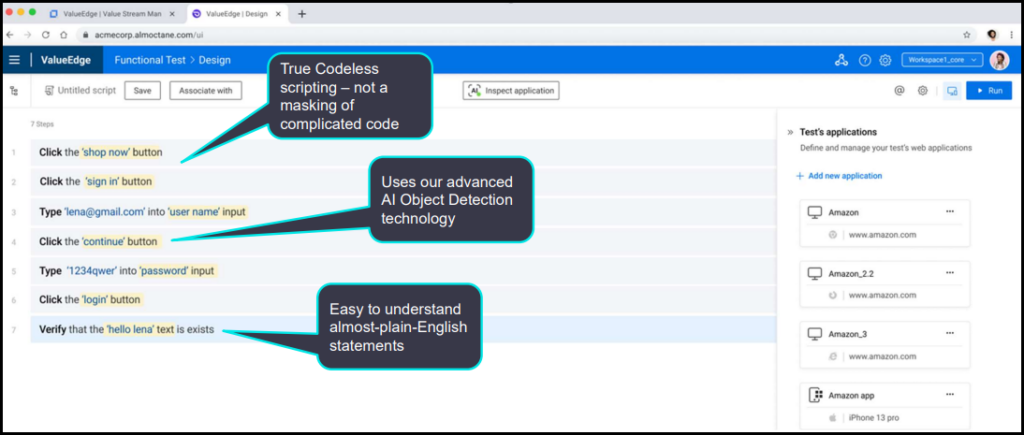
ValueEdge Functional Test empowers you to construct and refine codeless automated tests with intuitive natural language inputs and without typing a single line of code. It is based on the evolution of solid and proven technologies from the world’s leading test tool provider.
OpenText, the creator of ValueEdge Functional Test, has worked on AI and ML for many years and built it successfully into test tools such as UFT One. Therefore, the technology underpinning their codeless testing solution is proven and robust.
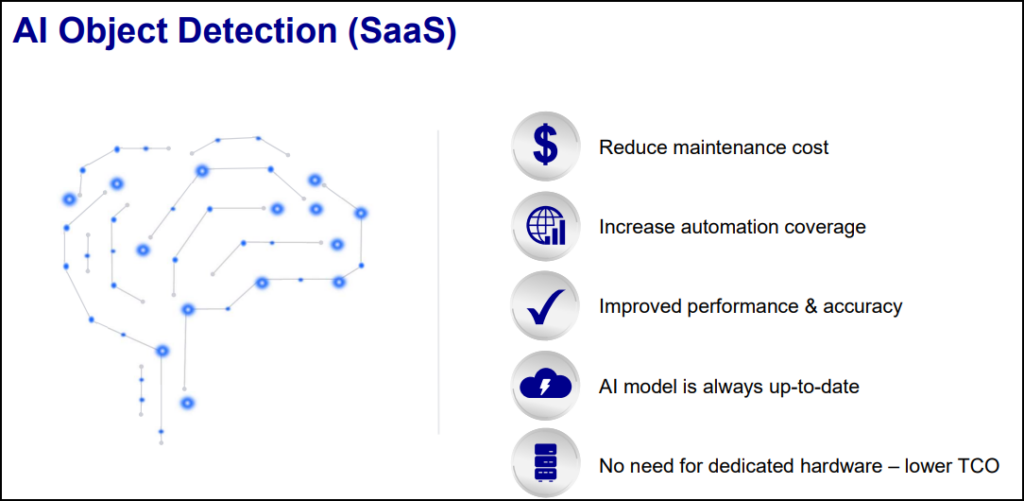
Furthermore, OpenText’s Object Detection functionality, a key component of ValueEdge Functional Test, has been honed over several years and further enhanced with AI capabilities.
Advantages of Codeless Testing With ValueEdge Functional Test
AI-based codeless automated testing with ValueEdge Functional Test has many advantages over other codeless test tools. These advantages make all the difference and include the following:
- Faster testing with proven AI and ML: ValueEdge Functional Test leverages AI technology to interact with visual objects, enabling rapid test creation.
- Cross-browser testing: You can execute ValueEdge Functional Test codeless tests against multiple browsers and mobile devices without rescripting.
- Reduced maintenance effort with object detection: ValueEdge Functional Test codeless tests adapt to object location or framework changes, significantly boosting resilience and reducing maintenance.
- Scripting for all: ValueEdge Functional Test codeless tests are described in plain English, opening automation to everyone, not just coders. This inclusivity enhances automation participation and test coverage.
Should You Start Using Codeless Testing?
Codeless Testing is more than just a trend; it’s a paradigm shift in software testing.
ValueEdge Functional Testing empowers you to break free from the shackles of traditional testing methods and embrace a more agile, collaborative, and efficient approach.
No matter your test team size, codeless testing with ValueEdge Functional Test will help you accelerate software projects and increase software quality.
Whether you’re a startup aiming to launch your MVP (minimum viable product) swiftly or an enterprise striving to improve product quality, Codeless Testing paves the way for an optimised, future-proof testing process.
Closing Thoughts
If you have read up to this point, you probably think that ValueEdge Functional Test is worth a look. However, you might also have a few outstanding thoughts:
- ValueEdge Functional Test sounds too good to be true – surely it must be expensive.
- It’s not – you’ll be surprised how little it costs.
- All these codeless test tools are going to be similar.
- They aren’t – there is a vast difference in capabilities, underlying technologies and ease of use.
- Open Source solutions will give the same benefits.
- They won’t – Open source solutions take longer to deploy, are less rounded, less complete and require more effort.
- Open Source codeless test tools will save me money.
- It won’t – Once you factor in the time to get it up and running, configure plugins, get your combined toolset to work, maintain it, etc.
OpenText is one of the largest software companies in the world and is committing $1 billion to R&D for the next 5 years. They will allocate a significant part to further developing AI & ML.
Have a look and see for yourself.