

Automation maintenance is a pain. It’s a frustrating time drain that nobody enjoys. Unfortunately, teams are doing more of it than ever, with modern solutions changing like the wind and each new release jeopardising script integrity. Thankfully, AI-driven automation is here to help.
Why Maintaining Automated Tests Is A Growing Challenge
Updating automated test suites can feel like painting the Forth Bridge. UI updates, increasing complexity, and intense release cycles can quickly generate a virtually endless stream of script rework.
Traditional maintenance approaches are no longer viable, but AI can help.
4 Ways AI Reduces Maintenance Effort
- Self-healing scripts
AI object recognition identifies elements even when their properties or locations change, preventing brittle locator failures and eliminating the need for manual script edits. - Cross-system testing
With AI-based object detection, your scripts can run against multiple platforms without modification. - Smarter element recognition
By using visual and contextual cues instead of fixed locators, AI interacts with interfaces more like a human tester, reducing false failures. - AI-assisted test design
Generative AI creates and updates test cases from requirements and change logs, even videos, reducing manual maintenance effort.
Personal Chatbots vs. Solid AI Strategy
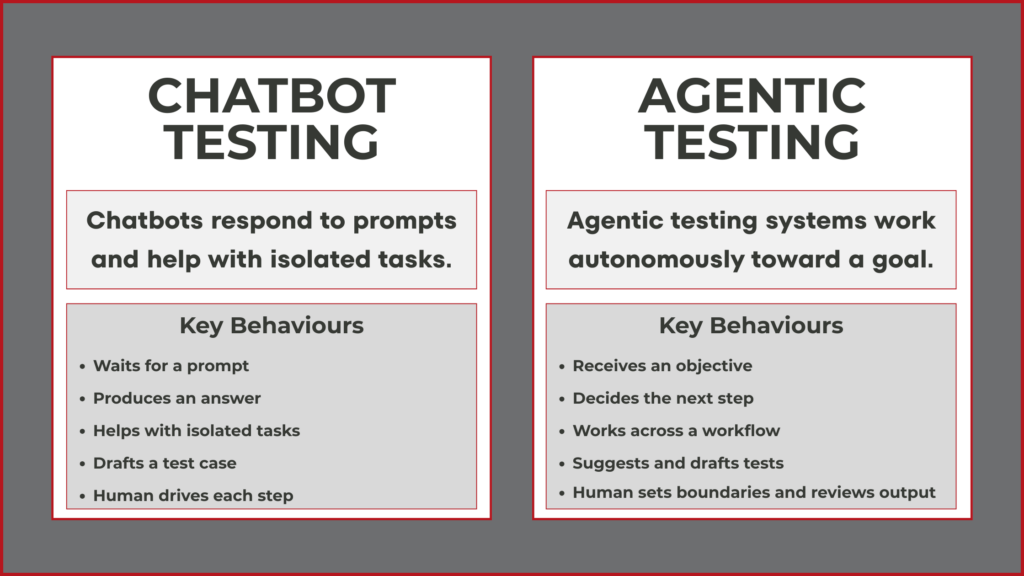
Most testers already use chatbots to generate tests and data, but this ad-hoc AI approach creates issues over time, including fragmented, inconsistent assets and an increased risk of data leaks.
A proper AI strategy leverages the benefits within tight guardrails that ensure quality, security, and compliance, rather than a random scattergun approach across myriad personal tools.
What To Expect From Professional Automation Tools
A unified, policy-driven AI framework will keep test assets consistent across your organisation, while reducing effort and accelerating timelines.
OpenText’s AI-powered testing solutions deliver exactly that. With tools like OpenText Functional Testing and OpenText Model-Based Testing generating real-world benefits, including:
- Less manual maintenance effort
- More consistent, reliable automated runs
- Faster releases with broader coverage
- Lower overall cost of ownership