

The way most people have been using AI for testing is handy for a quick script stub or some test data ideas, but it’s a long way from an industrialised solution.
For most teams, “AI testing” still sounds like a future promise rather than a secure, business-ready solution embedded in how their organisation works. It feels like something happening on the fringes, or more realistically, on a tester’s personal chatbot.
This is changing, though, and AI is quietly being threaded through the professional test tools that mitigate risk in regulated releases and complex environments.
1. Intent Driven Testing
The first wave of AI-assisted automation focused on making existing scripts a bit more robust. Object recognition became more forgiving, image-based interactions improved, and record-and-playback tools could handle small UI changes.
It helped, but it was hardly revolutionary. Programmatic solutions had been doing similar things for years.
The next generation of test tools feature genuine AI, or at least as we understand the term AI today. They take inputs such as:
- A natural language description of a flow
- An existing manual test case or requirements document
- A recording of someone walking through the application
From there, they generate and update automation assets for you, even suggesting new tests when there are changes to the solution under test.
2. Self-Healing at the Suite Level
Self-healing scripts are now a standard talking point. When an element identifier or position changes, the tool uses multiple attributes and learned patterns to find the right control.
It’s a handy safety net, but the next generation of test automation tools extends self-healing to the level of the suite:
- Analysing patterns across runs to spot common failures
- Automatically adjusting waits, synchronisation rules and environment settings
- Flagging tests that are no longer adding value
This kind of suite intelligence relies on deep execution history, rich logs, and tight integration with defect tracking and requirements. All of which are already standard in professional test management solutions.
3. Orchestration Across Tools
Many of the early AI testing tools did one clever thing but lived off to the side of the main toolchain. That made experimentation easy, but also created silos.
The next wave will see intelligent capabilities woven across the tools teams already use every day:
- Functional tools learning from performance bottlenecks and production incidents
- Performance tools pulling in usage patterns from functional suites and monitoring
- Test Management platforms that correlate defects, runs, changes and requirements, then highlight coverage gaps and emerging risk areas
When this happens inside a single family of tools, the intelligence acts on consistent metadata and shared artefacts: the same business process models, the same application mappings, the same user and environment definitions.
4. AI That Fits Real-World Enterprise Landscapes
Another pattern in the first wave of AI testing was a strong bias for cloud-only delivery. Many of the more experimental tools assumed:
- Software as a service deployment
- Modern web stacks only
- No awkward legacy systems, mainframes, or locked-down internal networks
Most enterprises have a mix of on-premises and cloud applications, plus tight security controls, and regulatory boundaries around where test data can sit. Next-generation toolsets will operate within those constraints rather than pretending they do not exist.
That is why some of the most useful AI capabilities are appearing within platforms that already support hybrid deployment, broad technology coverage, and integration with existing identity, access control, and governance models.
In-built AI features mean you can adopt AI gradually. You can turn on a capability in one project, learn from it, and extend it to others, rather than betting the entire practice on a brand new vendor.
5. Business-Level Guardrails
As AI becomes more embedded in test tools, you will see:
- Role-based controls over which intelligent capabilities are enabled, and for which users and projects
- Clear separation between customer data, model telemetry and vendor-side analytics
- Explanations or short rationales alongside AI suggestions, so users can understand and challenge them
For test teams, that matters as much as the headline efficiency gains. It is one thing to accept a generated test suggestion as a helpful shortcut. It is another to be able to justify, during an audit or incident review, why certain risks were considered covered based on those suggestions.
How Established Platforms Are Already Moving in This Direction
None of this is theoretical. If you look closely at the release notes and product updates from the major enterprise testing platforms over the last few years, you can see the next generation taking shape piece by piece.
The OpenText testing suite is beneficial because it starts from a broad, established base and layers intelligence where it makes practical sense. This makes it a good example of where AI-assisted testing is heading,
- Across the lifecycle, platforms such as OpenText Software Delivery Management bring together test runs, defects, requirements and pipelines, and increasingly use AI to help you see where risk is building up and where coverage is thin.
- In functional automation, tools such as OpenText Functional Testing combine AI-based object recognition, self-healing, codeless and code-based options, and deep technology support, so you can bring assistance into existing test suites instead of starting again.
- In mobile and cross-device testing, OpenText Functional Test Lab for Mobile and Web and related tools apply intelligence to visual validation, device selection and regression optimisation, which helps teams cover more ground without multiplying brittle scripts.
- For performance and scalability, the OpenText Performance Engineering family, including cloud, enterprise and developer-focused tools, uses advanced analytics to shape realistic load models, share scripts across environments and surface anomalies faster.
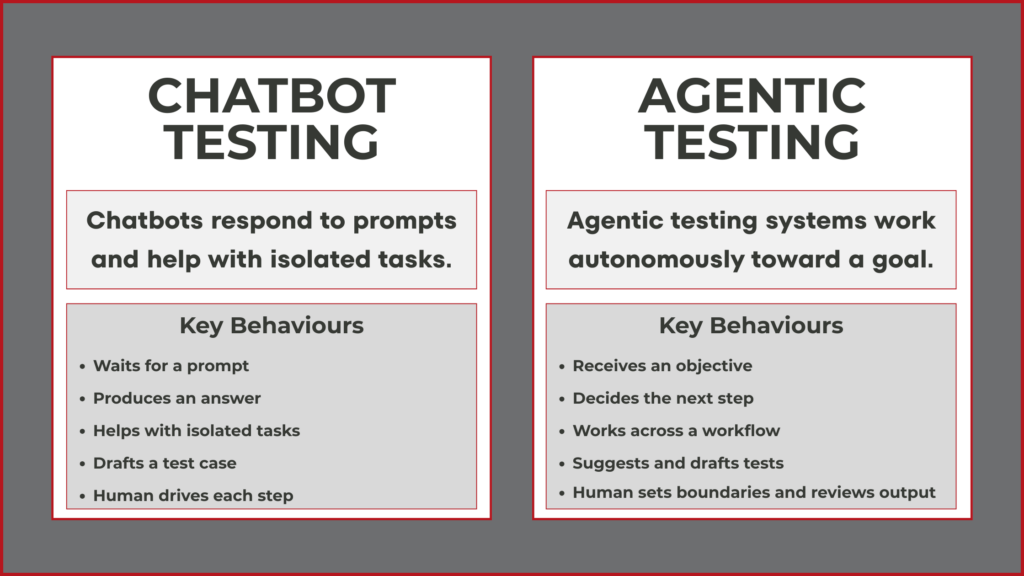
Agentic Testing
You might be wondering why I haven’t mentioned Agentic Testing.
Well, in the Testing Times June newsletter, we’ll take a look at this exact topic: what it means, why it matters, and how it could change the role of enterprise test teams.
Are You Exploring AI-Based Testing Options?
If you are planning your own next generation of test automation and want to see what AI can realistically do for you, get in touch today.
We can walk you through your options and tools that will fit your testing strategy.